
Seyfarth Government Contracts partners Adam Lasky and Donald Featherstun are presenting programs at Navigating Federal Government Contracts Northwest 2020 on October 21 and 22. The conference—which is hosted by Associated General Contractors of Washington, Washington State Procurement Technical Assistance Center, Pacific Northwest Defense Coalition, and Oles Morrison Rinker & Baker LLP—is two days of informative
Money for Nothing—Except Potential False Claims Act Liability
 CARES Act
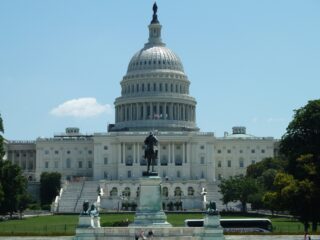
The Coronavirus Aid, Relief, and Economic Security (“CARES”) Act (P.L. 116-136) was passed by Congress and signed into law by President Trump on March 27, 2020. The CARES Act provides over $2 trillion of economic relief in order to protect the American people from the public health and economic impacts of COVID-19. Throughout its more than 300 pages, the CARES Act implements many initiatives targeted at various industries and economic sectors that are designed to stimulate cash flow and provide security for those at-risk.
Continue Reading Money for Nothing—Except Potential False Claims Act Liability
Seyfarth’s Construction Group Earns Top Tier Ranking and Government Contracts Earns Tier 3 Ranking from Legal 500
 The 2020 edition of The Legal 500 United States recommends Seyfarth Shaw’s Construction group as one of the best in the country. Nationally, our Construction practice earned Top Tier, and our Government Contracts practice earned Tier 3.
Based on feedback from corporate counsel, Seyfarth partner Bennett Greenberg was ranked in the editorial’s “Hall of Fame,”
Now Available! 50 State Survey of Legal Excusability
Force Majeure, Commercial Impracticability, and Frustration of Purpose
 The outbreak of COVID-19 has been one of the most disruptive events to the global economy in recent memory. Businesses across every sector of the economy are scrambling to determine the legal repercussions of government travel restrictions, labor shortages, supply chain interruptions, financing impacts, and market price
Civilian Board of Contract Appeals Decision Provides Guidance to Contractors Seeking to Recover Additional Costs Due to COVID-19
 While the global economy grinds to a halt over spread of the novel coronavirus (COVID-19) and people disband amidst calls for “social distancing,” these are uncertain times to say the least. Stay safe out there, we will get through this. While the health and welfare of our loved ones and the general public becomes the primary focus, federal contractors and subcontractors face a secondary and yet critical concern—how to address the impacts from COVID-19, which include labor disruptions, supply chain shortages, facility closures, remote work environments and government-mandated restrictions that make it difficult, if not impossible, to move programs and projects forward.
A recent decision by the Civilian Board of Contract Appeals (“CBCA”) related to an epidemic makes clear that whether or not a contractor will prevail in recovering costs associated with COVID-19 is going to be dependent on the specific contract provisions the parties have negotiated in their contracts.
Continue Reading Civilian Board of Contract Appeals Decision Provides Guidance to Contractors Seeking to Recover Additional Costs Due to COVID-19
COVID-19’s Impact on the Government Construction Contractor’s Performance: Recognizing and Implementing the Appropriate Claims and Defenses
 Sign up for Seyfarth’s Coronavirus roundup email.
Visit Seyfarth’s Coronavirus resource page.
The impact of COVID-19, the ensuing delays and changes in the work, protecting the contractor’s cash flow, and avoiding a default termination are now top of mind for every construction contractor. This article reviews delay principles, changes in the work, default and convenience terminations, illness of key personnel, stop work orders, and other considerations related to claims and defenses arising from COVID-19. Contractors must be alert to the practical aspects of entitlement and recovery under the clauses that come into play.
Continue Reading COVID-19’s Impact on the Government Construction Contractor’s Performance: Recognizing and Implementing the Appropriate Claims and Defenses
Coronavirus Pandemic: My Construction Agreement Has a Force Majeure Clause, So Now What?
 With the exponential spread of COVID-19, owners, contractors, and design professionals are recognizing the substantial impact this pandemic will have on the construction industry. Several states issued shelter-in-place orders, resulting in the suspension of some construction work.[1] In some states, this has resulted in work stoppages on some of our nation’s largest infrastructure projects. The financial impact of these work stoppages will be significant. As a result, parties to construction agreements have looked to their force majeure clauses for guidance on how these issues should be addressed.
Continue Reading Coronavirus Pandemic: My Construction Agreement Has a Force Majeure Clause, So Now What?
Federal Procurement Procedures During a National Emergency
 On March 13, 2020, President Trump declared a national emergency in response to the coronavirus (COVID-19) outbreak. Such a declaration has significant implications on the contracting community navigating the federal procurement process. While contractors are undoubtedly trying to manage existing contracts in light of labor and supply chain disruptions, many will be looking at the procurement landscape for business opportunities. Federal procurement law contains a number of provisions that authorize streamlined procurement procedures for major disasters or national emergencies. This article addresses the procedures that federal agencies may employ during a national emergency such as COVID-19. Because these procedures do not often look like typical procurement procedures, contractors should be mindful of the rules to better position themselves as they seek out opportunities.
Continue Reading Federal Procurement Procedures During a National Emergency
New Federal Contract Reporting Requirements Aimed at Protecting Supply Chains Through Detection of Counterfeit Parts
 Federal contractors already subject to a myriad of reporting requirements should be prepared for yet another. Effective December 23, 2019, a new Federal Acquisition Regulation (“FAR”) provision entitled “Reporting of Nonconforming Items to the Government Industry Data Exchange Program” requires federal contractors and subcontractors to report to the Government-Industry Data Exchange Program (“GIDEP”) certain counterfeit or suspect counterfeit parts and certain major or critical nonconformances. The new FAR provision (48 C.F.R. § 46.317) and clause (FAR 52.246-26) applies to both civilian and defense contracts over the simplified acquisition threshold, currently $150,000.
Where did this rule come from?
Foreign Governments Contracting for Construction in the United States: Navigating the Foreign Sovereign Immunities Act
 Foreign states and their agencies engage in a variety of construction projects in the United States, all of which are subject to the Foreign Sovereign Immunities Act (“FSA”).[1] This article explains some of the key aspects of the FSA that foreign governments and contractors should consider when engaging in those projects.
Foreign States and Their Agencies
Foreign states are treated differently from their agencies for certain aspects of the FSA. In deciding whether an entity is the foreign state itself or an agency of it, courts typically evaluate the entity’s primary purpose. If governmental, the entity is considered the foreign state itself, and if commercial, the entity is considered an agency. One line of cases holds if the entity is an integral part of a foreign state’s political structure, it is considered the foreign state itself.
Continue Reading Foreign Governments Contracting for Construction in the United States: Navigating the Foreign Sovereign Immunities Act